10 days
From $2,442 USD*
- Epic Great Wildebeest Migration
- Parks with Diverse Wildlife
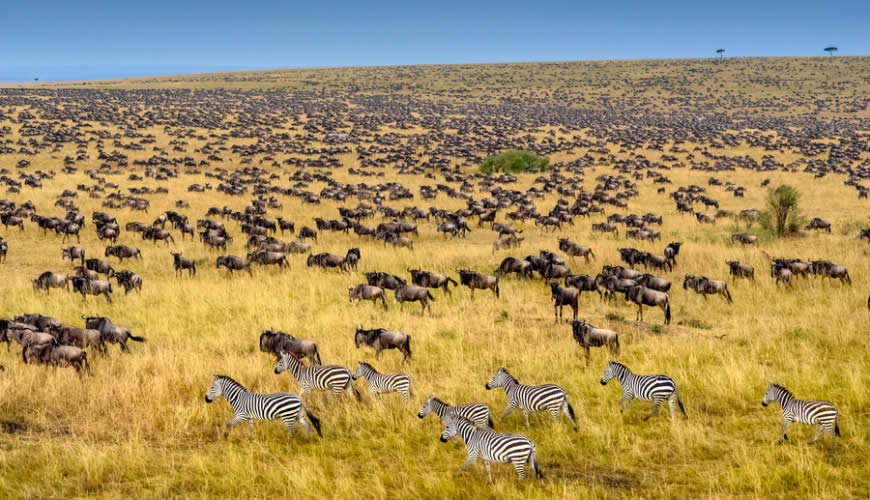


The Masai Mara National Reserve is located in the Great Rift Valley in Kenya and consists mainly of open grassland. It borders the Serengeti National Park and together they host Africa’s best known wonder – the annual great migration. The name Masai Mara was chosen in honor of the Maasai people.
The Maasai have been living in this area ever since they migrated here from the Nile Basin a long time ago. Mara means ‘spotted’ in Maa, the local Maasai language. It refers to the many short bushy trees you see dotted over de savannah plains when you drive through the park. To see how the Maasai tribe lives, you can visit one of their villages in the Masai Mara.
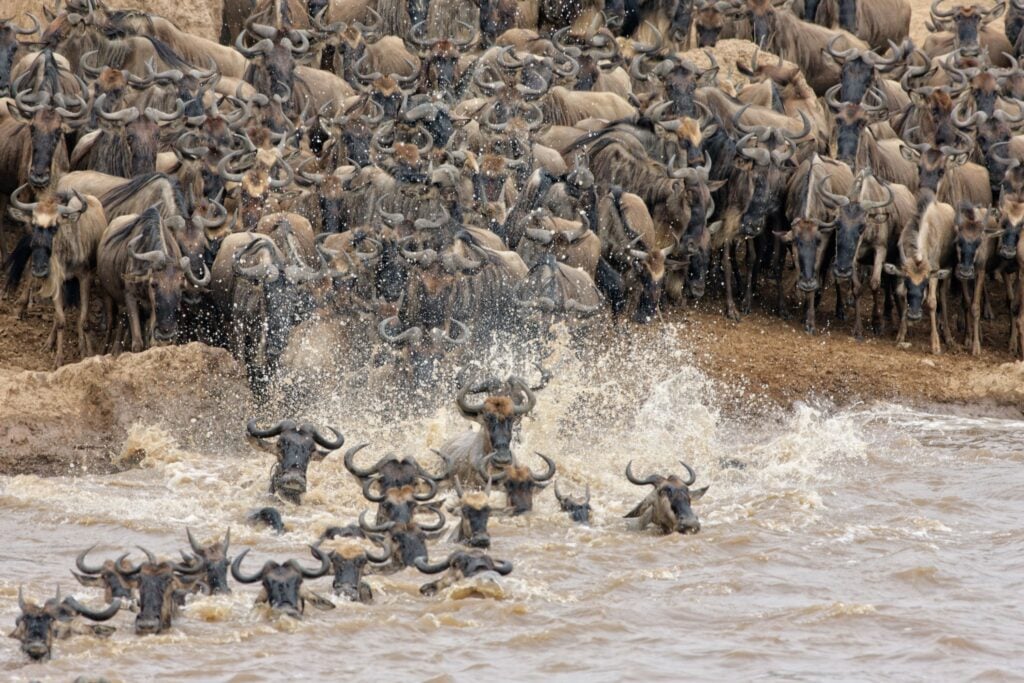
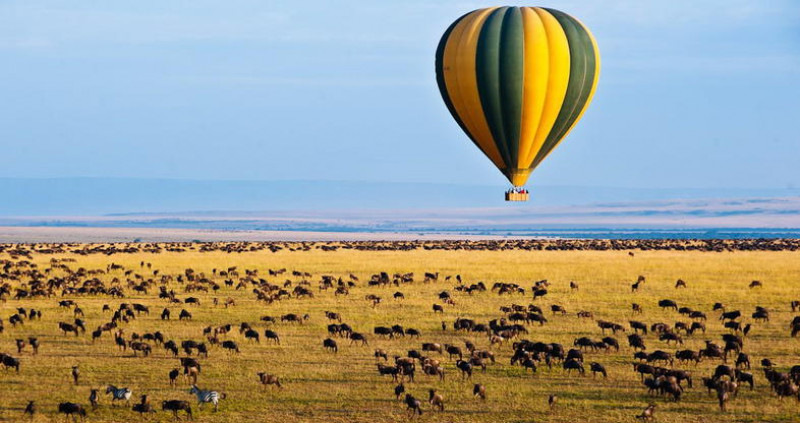
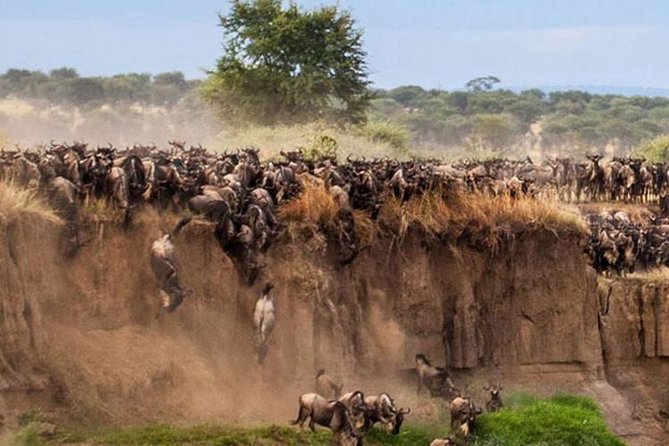
The National Reserve is home to more than 95 animal species and over 400 species of birds. The wildlife is usually based on the escarpment of the reserve. Between August and mid October you can visit Masai Mara to see the great migration of wildebeests, zebras, gazelles, antelopes and impalas. By that time they have most likely crossed over from the Tanzania’s Serengeti National Park on the other side of the border. This annual wildebeest’s migration involves over 2.5 million animals. The animals are crossing the dangerous Mara River in herds of thousands of animals in order to find fresh grass on the other side. Crocodiles are already waiting in the waters. This is an exciting spectacle you shouldn’t miss!
Visitors come to the Masai Mara Triangle because it is one of the best destinations in the world to spot wildlife. The Mara River runs through the Mara Triangle. It is the first area the great migration reaches once they come from Serengeti to the Masai Mara. You have an excellent chance to see lots of animals here. The famous Big Five (elephant, lion, leopard, rhino and buffalo) are habitants of the Masai Mara. And with a bit of luck you can see cheetahs, servals, hyenas, bat-eared foxes, and black-backed and side-striped jackals. The Mara Triangle is also home to hippos, crocodiles, baboons, warthogs, topis, elands, Thomson’s gazelles, Grant’s gazelles, impalas, waterbucks, oribis, reed-bucks, zebras and many more animals.
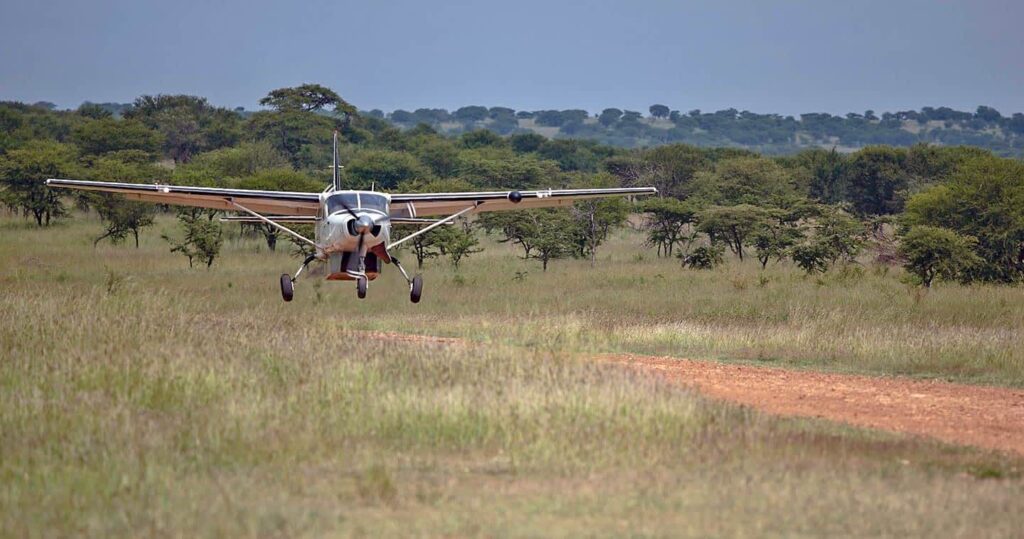
The Masai Mara is a 45 minutes flight away from Kenya’s capital Nairobi. There are several airstrips which are serving the different areas of the Masai Mara.
It is not easy to reach Masai Mara from Tanzania because there is no custom office nearby.
In the dry season from June to November and February and March, temperatures can be high during the day (30°C). In the rainy season from November through May, with peak rainfall in December-January and April-May, temperatures often drop to 20°C. It normally doesn’t rain throughout the day as one sees sunny mornings with rain clouds building up towards the afternoons and evenings.
We recommend to visit the Masai Mara between August and mid October, during the great migration. This is the only time that it offers added value, compared to Serengeti National Park in Tanzania.
The Masai Mara National Reserve is located in the Great Rift Valley in Kenya. It is known as a top destination, because of the annual wildebeest’s migration that passes here while they famously cross the Mara River. From August to mid October is the best time to visit Masai Mara, when the migration reaches Kenya and river crossings are taking place. But also Serengeti is good to visit in this time, together with the other months of the year, as the migration can be seen in different areas of Serengeti throughout the year. In Masai Mara you have a good chance to see the Big Five as well as cheetahs, hyenas, hippos, crocodiles, and many more animals. Masai Mara is a bit more crowded with tourists compared to Serengeti.
Although every year is different, and there are no guarantees about the way the great migration moves, there is a certain pattern that we can see:
Best time to visit Masai Mara: mid September to mid October